
BLISS RATING: ★★★★+
“When the sun has set, no candle can replace it.” – George RR Martin
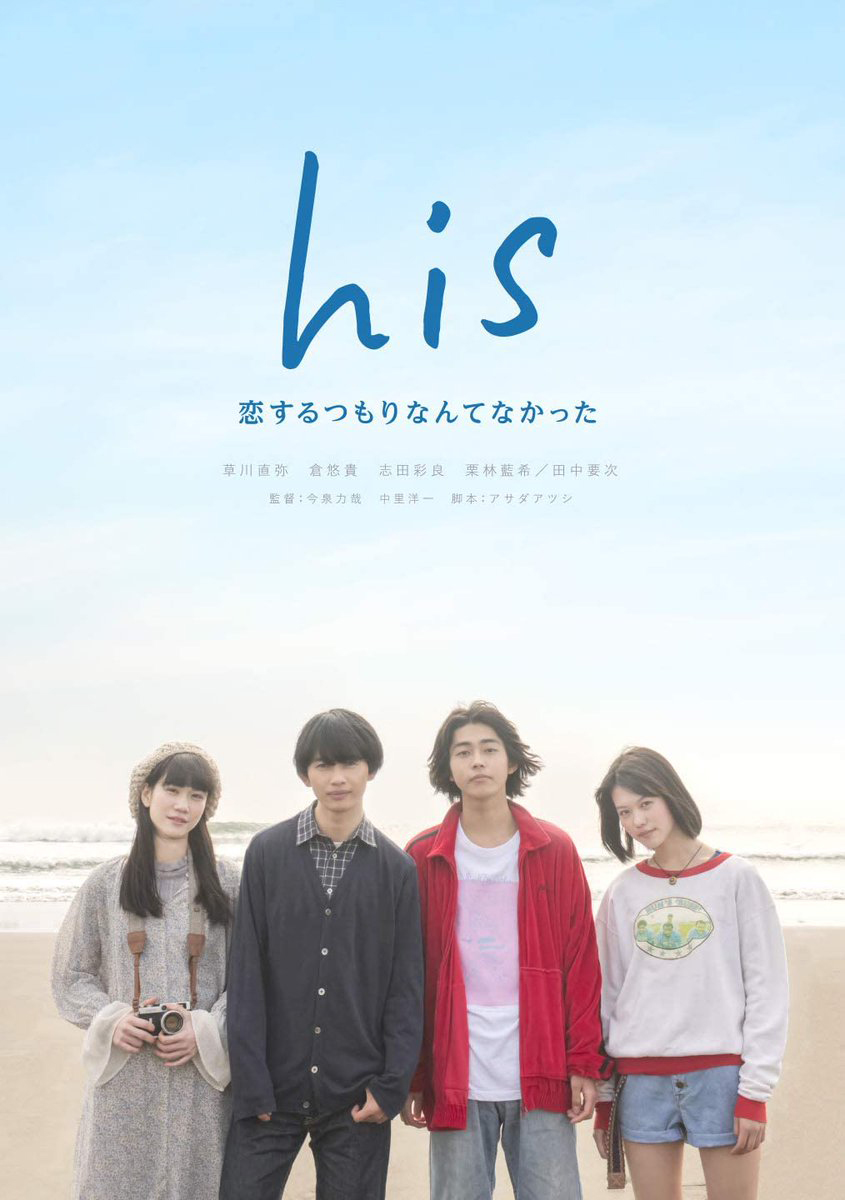
This is just an alluring coming of age story that is so nicely told and acted that it really is a work of great beauty and art. It is not overacted. A simple story told in a simple way with vision and grace. The two main characters are just stunningly handsome and play their parts with such conviction and fortitude. I just loved these two main characters.
One is Shun (Noaya Kusakawa). He comes to visit his father and through a series of misfortunes ends up spending time with a family that makes June and Ward Cleaver look like bad parents (If you did not get the reference, you need to look up ‘Leave it to Beaver’). This family is one of the best portrayals of an amazing family I have ever seen. They are the sweetest, nicest, most understanding, most in love, and the most accepting family ever. The mother and father are played so incredibly beautifully by Kawai Aoba as the mother and Tanaka Yoji as the father.
These are the parents we have all dreamt about as the most ideal and perfect parents. They brought humor, wit, acceptance, and joy to the whole family. Their performances were astounding and a delight to watch. The other main character is Nagisa (Yuki Kura. Nagisa) who is an enigma from the very beginning. He is reserved, rather matter of fact, pensive, aloof, and shuts people out. Except for Shun. Nagisa is an incredibly handsome (and I do mean handsome) boy which makes him irresistible to females. He is connected to this family by quirky circumstances, and they have sort of ‘adopted’ him into their fold. And the same thing happens to Shun.
However, their daughter Chika (Sara Shida) has a huge crush on Nagisa. Her friend, Ako (Aino Kuribayashi), develops a crush on Shun. Shun meets Nagisa as he is goes around taking pictures of the beach and becomes intrigued by him and his beauty. We can tell from the beginning that Shun is enamored by him but cannot express it or even define it. Nagisa, however, is smitten by Shun from the very beginning as we soon find out.
Long buried emotions and feelings come up to the surface for Nagisa and he, while trying to suppress then, cannot help himself but to feel joy, connection, and liking towards Shun. Shun responds the same way but not as intensely nor consciously; yet the stirrings are there. Both and neither want to express how they feel towards one another except only in the most socially acceptable way. Ako and Chika want to be their girlfriends, but they eventually figure out that who they are both interested in are not them. They can see that Shun and Nagisa have intense feeling for each other. As painful as this is for them, they realize that they have a higher duty to perform and that is to confront each of them with what they know and what they must do. Chika beautifully tells Nagisa that it is Shun that need to decide if he gets hurt, not him. “Hurting someone and being hurt are just part of being in love. Tell him you like him. If you do not, then neither Matisuki [Nagisa’s former girlfriend] and I will never get over our broken hearts”.
The subtleties of this series can be underappreciated. You have to seek the unspoken ques of love between these two and the euphemisms that are evident otherwise you will miss the great beauty of telling a story not so much in words but in visualizations and simple actions. This series is soft, almost like a gentle breeze that blows over you. The pieces of the puzzle of this love story do not form a picture until the end of the series when it all comes together. It is a story of the real youthful beauty of love told with quiet conviction. Each of these actors shows commitment and intensity in their roles without ever going overboard. Nagisa is pensive throughout and his reason for being so is described as a heavy burden to bear at such a young age and having to face that feeling all alone. Kura (Nagisa) has one of the most photogenic faces I have ever seen. He displays such deep introspection into his character that it really is amazing to watch. Shun is a loner who wants to be liked but is more interested in reflecting the world than his own pleasures or happiness. It is a profoundly moving story told so irresistibly well that it is one of my favorites. Well, well done.
Who really S.T.O.L.E. the series? The female characters of Chika, played by Sara Shida and Ako, played by Aino Kuribayashi really steal this series because it is about them as much as it is about the two boys. They are in pain, and they realize early on the futility of trying to fight that or deny it. The attraction is real; it just is not towards them. What they do is magnanimous and it comes across on screen so effectively and real. Kudos for presenting it this way without a lot of hysterics. They indeed are the strongest characters.
HIS – 2020
This is a movie based upon Shun and Nagisa being older. They have been in a relationship for some time but apparently Nagisa could not reconcile being gay and left the relationship. Shun is now beautifully played by Hio Miyazawa and Nagisa is awesomely played by Kisetsu Fujiwara. They are older, having had 13 years passed. Shun currently lives in a house, growing his own vegetables in a small mountain village near Tokyo. He lives the life of a recluse and pretty much wants and keeps it that way. He does befriend and older neighbor and to some degree a younger woman who also lives in this village of mostly older people. She is infatuated by Shun but eventually realizes that his only love is Nagisa. One day, Nagisa shows up with his 6-year-old daughter quite unexpectedly. True to form, the two react the same way as they did when they were younger. Neither know how to approach the other. But because their lives are now intertwined, the story of reconciliation for them begins.
It is not an easy road and one that is filled with a lot of pain and self-reflection. What is different in this movie as opposed to the BL series is that Shun has never really gotten over Nagisa and as hard as he tries to distance himself from him; he just cannot.
Nagisa, who originally pursued Shun, was the one who cannot deal with the stigma of being gay. He tried but failed to live the life as a ‘normal’ but in the end realized that his love, and only love, is Shun. It was a long and painful discovery that hurt many people, including Shun. But out of all that pain, he has a daughter named Soro (Sakura Sotomura), who worships him and to whom he is utterly devoted. Shun is also taken in by her and he begins to develop a relationship with her. She sees only love between her father and Shun.
Unfortunately, Nagisa has a wife, and they are contesting who gets custody of little Soro in the divorce settlement. Nagisa makes an incredibly magnanimous decision about Soro that eventually will leave him still able to see his precious daughter. What is so profound about this movie is not so much about their love story, which by all accounts is not emphasized very much, but it centers around the intense pressures of culture and societal norms on people in general and gay people in specific. But ironically, this village where the two end up living, know about and is accepting of their relationship. They are the ones who realize that everyone must live their lives as best they see fit and not let society determine or establish what is appropriate or not.
Also, little Soro sees EXACTLY what these older people see as well. They are simply, Dad and Shun. It is what it is supposed to be and must be. There is a stunning scene in which Soro wakes up and sees her Dad passionately kissing Shun. She looks but only sees love and normalcy. The wife, as painful as all of this is for her (and she has been wronged), begins to see this as well and accepts the intensity of feelings they have for each other.
Who really S.T.O.L.E. the movie? The acting here is nothing short of brilliant. Neither Shun or Nagisa of them gets maudlin but show great pain. They are almost fatalistic but never become fatal. They have glimmers of hope and seek a sense of peace and getting along. Perhaps that is the best they will ever achieve. Both Miyazawa and Fujiwara are handsome but show the strain of life and not being able to be truly happy. Their acting is just breathtaking. But, Sakura as Soro absolutely steals the scenes when she is present. She plays her part with such intensity and passion for a little girl. She is simply breathtaking to watch. And as usual in so many of these cases, is the force that bridges the two men together into a loving union and makes it whole.
While the movie is hopeful, it is still profoundly sad and melancholic. Societal norms still determine that this relationship is not normal. It nearly ruined their relationship forever, and permanently changed what life’s paths they both took. It is a story painful to watch and made me cry. Not so much for its sadness, but for the lost opportunities of love they could have shared with each other. But fate has determined that, it is what it is, and you live your life in the moment and become grateful for what you have. It is an incredibly moving story of love, togetherness, and fortitude. And in the end, a beautiful being named Soro may help in some small way perhaps begin to change her world and how they view her father and his love.
This is a great culmination of the BL story and makes the whole story so real. I was deeply moved by this movie, and it should simply go hand in hand with the series. It is not a ‘feel good’ move per se but it is not necessarily disconsolate. Watch it.
I have rated these two together. For me, they are so intertwined it would be hard to separate them. To understand the story of Shun and Nagisa, you have to watch both.
Leave a Reply