
BLISS RATING: ★★
“Don’t allow someone to make you feel like you are not good enough.” –therandomvibez
Honestly, I am not sure what to say about this series. It is awful. Incoherent. Messy. And takes the wrong road to get to its destination. I wanted to drop this series because of the incomprehensible ways that people supposedly in love treated each other. I did not because of its quintessence.
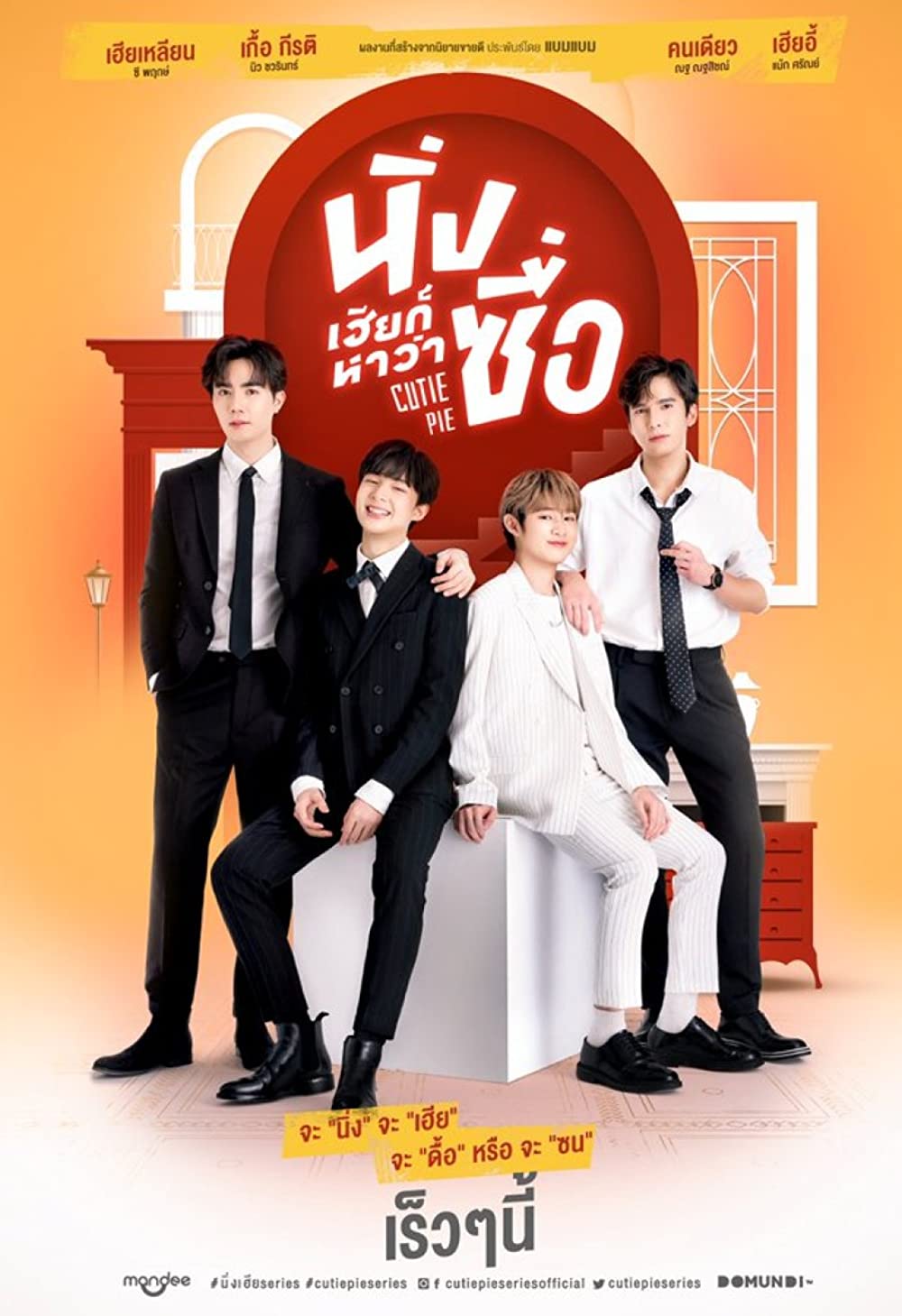
It begins with two families. One rich and the other one poor. Kuea (NuNew Perdpiriyawong) is born into a wealthy family. Because the grandfathers of each family know each other (and are the key to this story), they bring in Lian (Zee Panich) from the poor family as a playmate, then protector, eventually a guardian, and always a friend for Kuea. Over the years, Kuea and Lian become like brothers and the families, especially the grandfathers, encourage them to further intensify their relationship and feelings for each other.
At one point, the grandfathers betrothed the two and it becomes obvious that ‘marriage’ is inevitable for the two of them. This is the antithesis of everything I know about Thai culture (which I know is limited) that this would be considered, but it is. And it seems to be accepted by both families. Throughout the years, Lian’s family work hard and turn their struggling water business into a thriving empire. Both Lian and Kuea accept their realities and their defined roles.
But everything about this ‘love’ story is reprehensible. Here is a list of ignoble characteristics of Lian and Kuea:
1. Both are liars. They are at their core, liars. They lie to not face reality. Lying is simply second nature to them.
2. They are personas. They project facades and are almost always incapable of separating that from who they really are. Kuea displays a split personality but justifiably, so that he can maintain some semblance of himself. Otherwise, he would be smothered by expectation of who and what he is.
3. They are terrified. They are all scared, frightened little boys trying to play big bad irascible boys.
4. In fostering this relationship, Lian becomes pejorative, with Kuea reacting in kind. Some of the most emotionally abusive behaviors I have ever seen in a series, is in this story. Lian is a despicable, arrogant, condescending, manipulative abuser. He guises his abuse with what appears to be good intentions. There is an adage that states, “The road to hell is paved with good intensions.” And this story fits that description. Lian tries desperately to break Kuea’s spirit and turn him into his own image. In fact, he emotionally and physically forces Kuea to live with him and treats him like a petulant child. That bluntly is abuse.
5. Both are incapable of communicating honestly, truthfully, and openly to each other. This seems to be a standard theme in every Thai BL as of late. Yet, even as Lian is given warnings about the consequences of not being open and truthful especially about what he is doing to Kuea’s wealth, he never really does until it becomes a disaster.
6. This story goes out of its way to show how the victim, in this case, Kuea, begins to think of himself as the fault of his own abuse and deserves it. Oh, it is subtle, but it is there. Kuea ‘lied’ to Lian because he was afraid of him but that gets twisted. As is usual in abusive relationships, the victim is not allowed to have ‘secrets’ and must share everything with the abuser. Always, of course, for the victim’s ‘own good’.
7. Lian’s personality is a Jekyll and Hyde. He is mean, cold, calculating, and abusive in the beginning. Then suddenly and frankly inexplicably turns nice, loving, and caring. Not only is Kuea confused and distrustful, so is the audience. This causes Kuea to become even more confused and susceptible to Lian’s charm and whims and manipulations. I found all of that simply despicable.
Lian’s best friend and business partner is Yi (Max Kornthas) who has much the same personality as Lian but seemingly edgier. He too has a ‘boyfriend’. Diao (Nat Uareksit) happens to be Nuea’s best friend. Their relationship is simply toxic from beginning to end but guised as being compassionate and benevolent. For reasons not fully explained, Yi is the cause of Diao’s memory loss (again not fully explained or observed). Diao seems to function exceptionally well. Having taken pity on him, Yi ‘overprotects’ Diao and therefore smothers him to the point he is terrified of crossing him.
I found this whole relationship dysfunctional and almost maleficent. Diao is reduced to a frightened little boy and becomes a puppet to the manipulations of Yi, until he finally had enough. All the same characteristics list above for Kuea and Lian are also true for Yi and Diao.
There is a third couple that is by far the most staple and balanced of the three. It is a budding romance between two of Kuea’s friends and classmates. Syn (Yim Khansawa), the spiritual leader of their work group, and Neur (Tutor Koraphat). Both are astonishingly handsome. The development of their relationship is so endearing and provides such a welcome relief from the toxicity of the other two. Their relationship is based of getting to know each other and accepting of each other and not straining to make something happen. It was a welcome relief from all the drama of the other two malignant relationships. Because it is presented so softly and beautifully, you cared about these two. So, they became more alluring which merely added to their existing beauty. Their natural charm, chemistry, and seductiveness made them irresistible, and I want to see more of them together. Let them have their own series.
What made this series so intensely unlikeable is how pejoratively Kuea and Diao were portrayed. Not just the fact that they saw them in an outdated ‘damsels in distress’ light needing to be protected but also how they sentimentalized them. They saw them in a traditional ‘feminine’ role. I could not quite figure out why I was having such a negative reaction to this whole story and then it dawned on me. This story is a throw-back to the romance movies of the 50’s where you had to ‘protect’ the woman.
She was, by her very nature, incapable of making decisions. She would get emotional and therefore would not fully understand or comprehend the whole picture. The ‘man’ had to protect her, essentially from herself, and make all the major decisions. After all, it was all for ‘her own good’.
She had to be placed on a pedestal and worshipped. Therefore, I hated this series in how each perceived his ‘partner’ – weak, needing to be sheltered, undisciplined, driven by emotions, and totally incapable of handling the facts. She, I mean he, was incapable of understanding the entire picture and of course everyone around her, I mean him, could make decisions except her, I mean him. In reality, both these guys were strong, independent, and quite capable of thinking and deciding on their own. In fact, they had a completely independent life and because of that were considered ‘naughty’ and had to be put back in place.
When Lian proposed to Kuea at Lian’s father’s birthday party and Kuea rejected him I cheered. He rejected him for exactly the same reasons I would have (plus I would have thrown in emotional abuse). He did not really love him because he was not his equal, and not entitled to all the privileges and responsibilities that go along with being someone’s equal. It was all a sham. Kuea loved Liam because he had nothing else to compare it to. And Lian loved Kuea because it was expected that he would.
Who really S.T.O.L.E. this series? Honestly, the acting in this series is first-rate and there is little to be critical of in terms of performances. They projected their roles as scripted. But who impacted me the most was NuNew Perdpiriyawong as Kuea. He had a tremendous range of emotions to play, and he played them all with conviction. When he was the ‘Annabelle doll’, it was completely believable. When he was his different persona, he was unique. His growth is shown in spurts and fits but based on a foundation of denial. He cannot wrap him mind and brain around the idea that someone he so deeply loves is treating him like this. Yet, throughout, he consistently and unrequitedly continues to love Lian. It is written and is fate. That is some masterful acting to play victim, hero, independent, yet vulnerable without ever succumbing completely to the wishes and whims of Lian and his own family. The nuances and subtitles of all those emotions were a joy to watch and be appreciated. Kudos to some fine acting here.
Yet, my wall of dislike for this series cracked just a little for the message this series was trying to project. And for that they deserve praise. They were not afraid, as in most other Thai BL series of late, to show some real adult-like connections between the two couples (and even in the third with a brief but so adorable kissing scene in the bar). They were prepared to kiss, caress, and make us feel that the love was genuine and real. That is deeply appreciated. But its more important precept that they were focusing and concentrating on trying to change their society’s discriminatory and primitive thinking about ‘gay’ marriage. And the asinine laws against individuals marrying their own gender.
They tried (with the wrong story) to see that the notion of two guys betrothing, or marrying, or being together should be, ought to be, and must be, an option. They projected that message loud and clear and for that this series deserved an extra plus. If this story had not crashed and burned in how they perceived couples and had taken a different direction or been more on point, I believe this series could have had a big impact on how people see gay relationships. So, their effort is to be applauded.
If I may suggest, that if the story of Syn and Neur were further developed, they could win over the minds and hearts of others. Why? Because they are stunningly handsome with boy-next-door looks and a charm and charisma about them. They are way more relatable as they are not wealthy, aristocratic, or have a lifestyle so different from ordinary individuals. And finally, they project credibility and authenticity, making them genuine and unpretentious. Those are greater assets to portray believability.
Leave a Reply