
BLISS RATING: ★★★★★
“Sometimes I don’t want tomorrow to come.” – Quote from THE ECLIPSE,
I am always astonished how humans can see one thing and interpret its impact so diametrically opposed. This BL series was generally panned – a lot. I thought it was brilliant. Its message was perhaps lost in the way the story unfolded. That is too bad because its message and meaning is quite significant. For sure, this story twists and turns in sometimes strange ways and does not smoothly transition from beginning to end. But if you understand the intent behind it, it is quite an impactful and moving story. Remember, this is yet another never-ending Thai BL about high school boys. But with this one, I took the time to see it from the perspective of a Thai teenage boy. And guess what? It is messy, uneven, illogical, immature, and chaotic. Just like a teenage boy IS. This was one of the few times that I thought these endless school BLs finally captured the essence of a teenage boy. Silly, impressionable, vulnerable, passionately committed, searching for truth, making mistakes, failing, and falling deeply and hard in love. Have we forgotten?
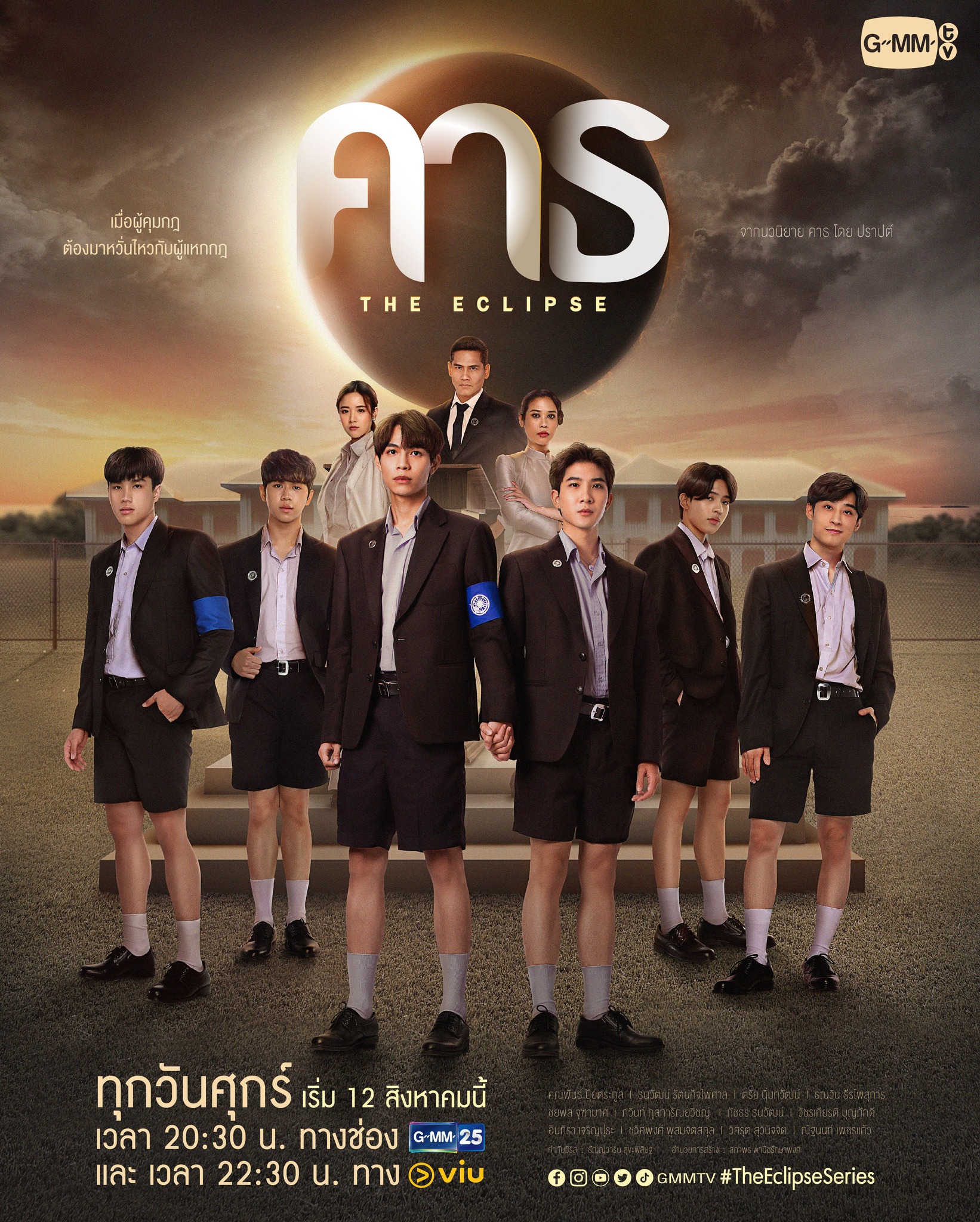
The story captured me from the beginning. The serious follow-the-rules student Prefect President named, Akk (First Puitrakul) is a stickler for adhering to a bunch of silly outdated rules and regulations in this all-boys school. One day he meets a transfer student named Ayan [Aye], (Khaotung Thanawat) who will not play by the rules. And immediately, the sexual tension between the two becomes palpable. Each are drawn to each other yet repel the other on principles. This is their story. And it is quite a journey of self-discovery.
The more intense discovery is for Akk, however, because his whole world is shaken to its core. He believes so much in his mission to keep dissidents in line, he is willing to compromise his core values, his integrity, and moral/ethical values to do so. His principles are shaken quite nobly by a bunch of gay activists (by the way, they are the REAL heroes in this series) who will not back down and continue to fight for their rights. As Akk begins to realize he too in essence is one of them, he faces both moral, ethical, and internal struggles on how to handle all of that. Alongside him, however, ever present, is Aye. Always there. Always supporting him. And quite literally his rock and strength yet always mirroring what he did was wrong.
Aye has his own set of truths that he is after. His uncle, whom he worshipped, was once a teacher at this school. He too was a victim of its own indoctrinations, much like Akk. But his ending is much more tragic. With Aye focusing on the truth and finding out what happened to his uncle and how he got to such a low point, he must experience not just truth but a painful revelation. Not so neat and not so easy to blame or fault.
This story got into the inner workings and minds of all the characters. The intensity of feelings, emotional pain, and misgivings were evident throughout. We see real anguish. We also see real change. But we see genuine love as well. And we see life and unfortunately, we also see death. We witness great awakenings for truth and principles but the road to discovery is done in ways border on questionable and unscrupulous methods.
Who really S.T.O.L.E. this series? Honestly, this is an exceptionally well-acted series. Both First and Khaotung brought a richness to each of their characters and a depth to them that was surprisingly ardent. They are the exact definition of the adage, ‘one step forward and two back’. Their connection to each other was at times magical. Throughout, however, their sexual tension was palpable and amazingly engrossing. First, showed great range in helping the audience see and define who Akk was. His emotional scale was outstanding, and I believed them all. But the one who is center and focused and surprised me the most was Thua (Louis Teeraphosukarn). His portrayal of this rather enigmatic character was brilliant. He was quiet, studious, yet always in the background, watching, waiting, and agonizing. He has been bullied because he is ‘gay’ and has accepted it with dignity. Thinking he was trying to play ‘neutral’ and not take sides, he was agonizing on how to get to the truth. His mannerism, gestures, facial features are what gave his character so much development. Although laconic, he spoke volumes in the way he carried himself with dignity and a sense of worth even if others did not think so. And his slow burn romance with Khan (Trai Nimtawat) is believable and felt very real to me. While you can question his method of getting people to tell the truth was morally questionable, I could see the agony in his face that he felt he had no choice. Remember, he is still a teen. Louis’s acting was one of subtilty and quietness. When he was present, you could feel him in the room. I found his acting incredibly enticing in a nuanced fashion. You just knew he was there. He drew you in.
Honestly, I think this series got a bad rap. It was full of human drama, human emotions, with levels of immaturity and dogmatic thinking. Yet, it pushed its message of freedom, acceptance, and equality to the maximum. And it did so through the eyes of a couple of teenage boys falling in love.
There are so many examples of genuine emotional milestones. Several scenes with Akk and his parents are incredibly noteworthy and very well done. The dialogues between Akk and Aye are exceptionally sensitive and heartfelt. And Aye’s internal struggles with his uncle and what happened are both poignant and touching as well as those with his mother.
And finally, (perhaps you might want to stop if you have not seen the series) a word about the ‘elephant-in-the-room’. Thank you. The whole notion of Aye’s astonishingly handsome uncle Dika (Ron To-oun) and his suicide is handled with sensitivity and care. He had a mental illness diagnosis. That is a fact. There were triggers and we got to see those triggers. The whole situation with his love affair with Teacher Chadok (Yai Boonphakdee) was painfully honest and had me in tears. It played out so meaningfully that one could not help but feel sorry for Chadok’s heartbreak and loss. Regret was written all over his face. The small human gesture of respect Aye gives to Chadok, an object he previously despised, of his uncle’s diary was a magnanimous gesture. Not only of understanding but of maturity.
This series tells a greater story through its emotions than its words. Sure, the story is a bit messy and perhaps not as tight in the end as it should have been. But I think its overriding theme was to give the audience a sense and feel for what it is like to be a mixed-up, unsure, awkward, teenage boy, wanting and trying to do what he thinks is right, no matter what his perspective is. And I deeply appreciated that and felt connected to this story.
It is one of the better Thai dramas despite the pans, if you simply let yourself go and be an awkward and impressionable teenage boy.
While this series did a yeoman’s job in tackling the whole issue of suicide, I do wish that it would have given at the end a ‘hotline’ number for suicide or mental health crisis. Surely, they have them in Thailand and as a public service, I wish they would include that in the credits. It just might help someone, especially in our community.
Leave a Reply